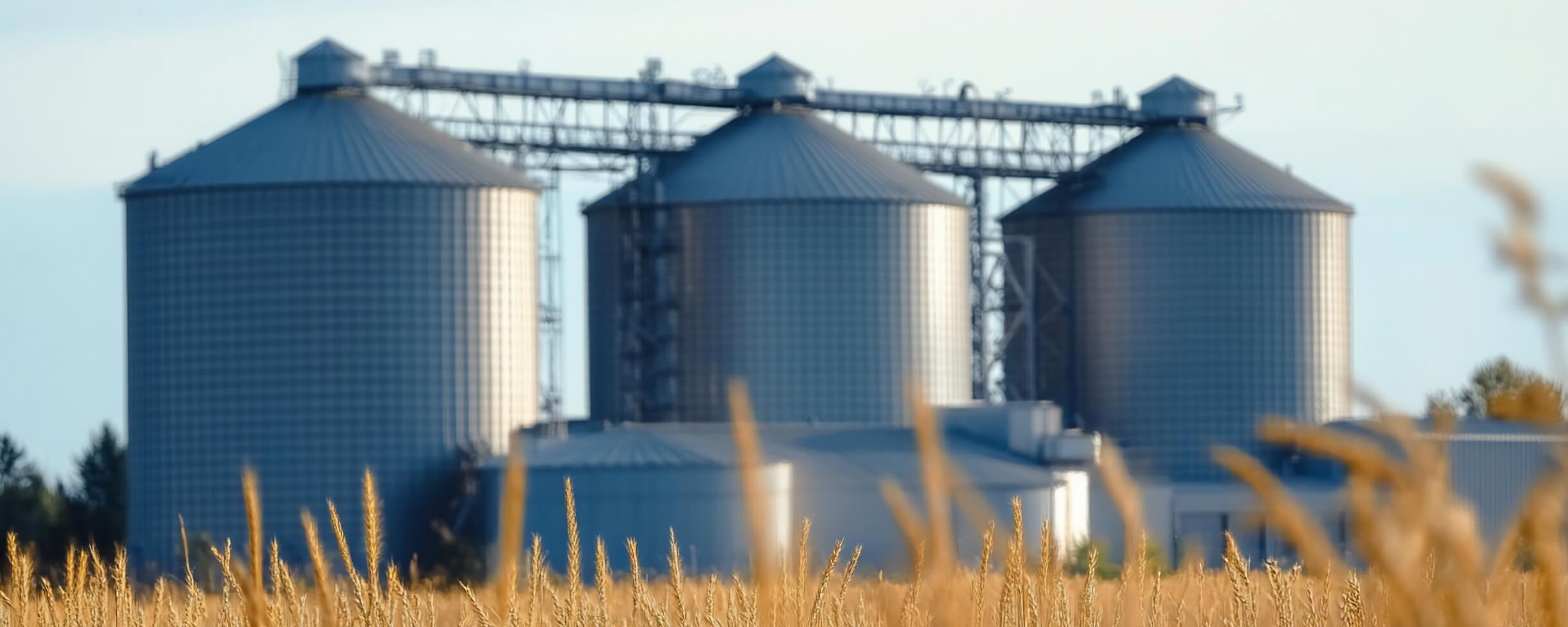
Grain Silos
We offer modern grain storage solutions for farmers and agribusiness companies. Through robust construction and proven technologies, we help optimize logistics processes and maintain the highest quality of stored agricultural produce.
Our offer includes:
- Design of silos tailored to the investor’s needs and production scale
- Comprehensive construction and installation of storage facilities
- Design of silos with all necessary technical and technological infrastructure
- Technical consulting and service support at every stage of operation
Challenges
Changing quality standards for grain storage require solutions that ensure effective control over stored materials. A lack of proper infrastructure can lead to economic losses and a decline in the quality of stored produce.
Our Role
We provide facilities that meet the standards of good agricultural storage practices. We support our clients at every stage — from concept and construction to facility commissioning. Each project is analyzed individually, allowing us to determine the optimal capacity, structural type, and necessary equipment.
Questions We Often Hear
Temperature measurement in silos is carried out using multi-sensor temperature probes designed for operation in ATEX Zone 20 environments. Depending on the silo’s size, several to dozens of measuring sensors are installed. An electronic monitoring system continuously reads real-time temperature data from each sensor, displaying it on a graphical control panel. The system also enables data archiving and detailed analysis of temperature trends.
To indicate the maximum filling level in a silo, rotary or capacitive sensors are used — both designed for operation in ATEX Zone 20 explosive environments. For continuous monitoring of the grain level from minimum to maximum, electromagnetic distance transmitters (so-called radar sensors) are applied.
Grain storage facilities must be located in accordance with the Announcement of the Minister of Agriculture and Rural Development of January 13, 2023, regarding the technical requirements for agricultural structures and their placement (Journal of Laws of February 15, 2023, item 297). According to these regulations, silos may be located as follows: - 10 meters from premises intended for human occupancy and from livestock buildings, but not less than 15 meters from windows and doors of such premises or buildings; - 8 meters from other buildings (non-livestock); - 4 meters from the boundary of an adjacent plot; - 15 meters from coal and coke storage areas; - 15 meters from installations used for the production of agricultural biogas. Alternative placement is permitted when silos are technologically integrated with other facilities (e.g., feed mills or flat warehouses), provided that relevant fire safety regulations are observed.